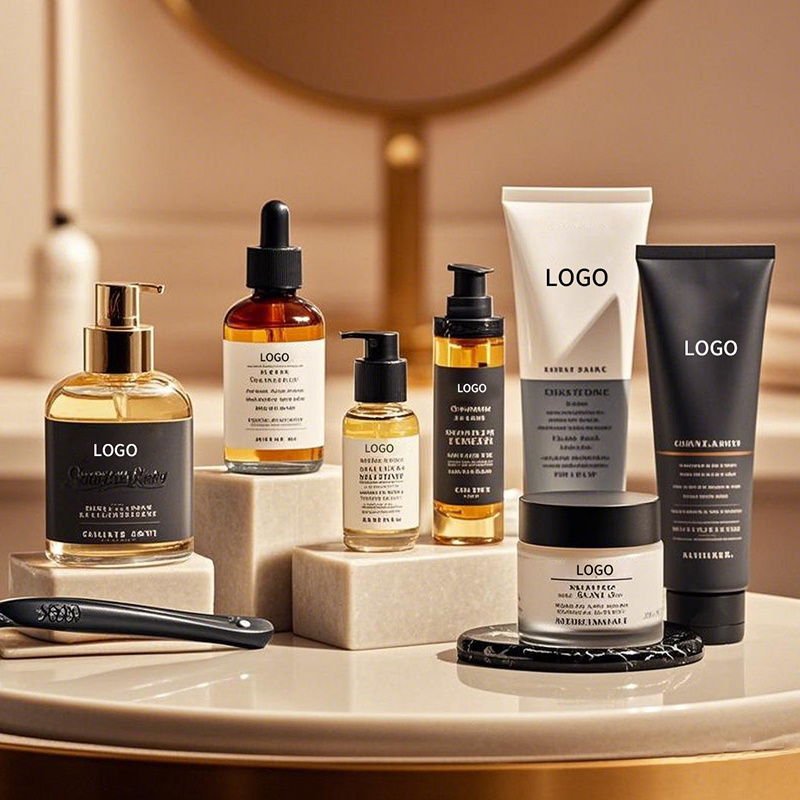
A reliable salon skincare manufacturer should be judged by production controls, regulatory records, formulation capability, testing, batch consistency, packaging performance, MOQ, and delivery history rather than unit price alone. In 2026, FDA data showed 16,398 active cosmetic facility registrations and more than 1.29 million active product listings under MoCRA, so registration by itself does not separate strong manufacturers from average ones. Buyers should verify ISO 22716 practices, request batch records and Certificates of Analysis, review stability and microbiological testing, and compare at least 3 production samples. A supplier should be able to reproduce an approved formula within documented pH, viscosity, fill-weight, packaging, and microbiological specifications.
Start with the manufacturing site rather than the sales presentation. Ask for the factory's legal name, physical production address, manufacturing scope, quality certificates, and the entity that will appear on invoices and contracts. ISO 22716:2007 covers production, control, storage, and shipment of cosmetic products, and the standard was reviewed and confirmed as current in 2022. A certificate should therefore show the correct facility and a valid certification scope rather than only a recognizable ISO number.
A manufacturer selling into the U.S. market should also understand MoCRA requirements introduced by the Modernization of Cosmetics Regulation Act of 2022. FDA states that facilities subject to registration must renew every 2 years, while responsible persons must list marketed cosmetic products and update product listings annually. Registration is not FDA approval, and FDA does not issue approval certificates for ordinary cosmetic facility registration or product listing.
Ask the supplier to show how one finished batch can be traced back to its raw-material lots, manufacturing date, production line, filling records, packaging lots, quality results, and release approval.
Traceability matters because professional products are normally produced in batches much larger than laboratory samples. A 500 g development sample may behave differently when increased to 200 kg or 500 kg because heating time, cooling speed, homogenization, ingredient addition order, and shear conditions change with scale. Review at least 3 stages before accepting routine supply: laboratory sample, pilot or pre-production batch, and commercial batch.
The approved product specification should use numbers rather than descriptions such as "light texture" or "high viscosity." A facial cream specification can state pH 5.2–5.8, nominal fill 50 g, appearance range, odor reference, viscosity test method, packaging model, pump or closure requirement, and artwork version. When the first commercial batch arrives, random units can then be checked against the same limits instead of relying on a visual comparison.
For active ingredients, request the exact INCI name, supplier specification, use concentration, and concentration of the commercial raw material. A formula described as containing 1% peptide solution does not necessarily contain 1% pure peptide because the purchased ingredient may include water, glycerin, preservatives, or other carriers. The same question applies to hyaluronic acid blends, ceramide complexes, botanical extracts, vitamin C derivatives, and retinoids.
A supplier developing products for a men's skincare brand should also be able to adjust sensory properties without treating men's products as a fragrance change. A lightweight moisturizer intended for daily use may require faster rub-in, lower residue, controlled shine, compatibility with facial hair, and packaging that dispenses a repeatable dose. Compare at least 3 samples under the same application amount before approving texture.
Raw-material management should receive equal attention. Ask whether each incoming ingredient receives a lot number and Certificate of Analysis and whether the factory checks identity, appearance, odor, expiration status, and storage requirements before release. For ingredients that are sensitive to heat or oxidation, request storage-temperature records and shelf-life controls. A 5% price difference between two factories can become irrelevant when one supplier cannot document which ingredient lot entered a finished batch.
| Item to verify | Useful evidence | What to record |
|---|---|---|
| Raw materials | COA, supplier specification | Lot number, expiry date |
| Bulk formula | Batch manufacturing record | pH, viscosity, batch weight |
| Finished goods | QC release report | Fill weight, appearance, coding |
| Packaging | Compatibility records | Leakage, pump output, closure fit |
| Shipment | Inspection report | Quantity, carton condition, lot codes |
Testing should match the formula rather than follow one fixed checklist. Water-based creams, cleansers, toners, masks, and serums need appropriate microbiological controls, while emulsions also require attention to separation and viscosity change. During development, manufacturers may evaluate room temperature, elevated temperature, low temperature, freeze-thaw exposure, light exposure, centrifuge behavior, and compatibility with the final bottle or tube.
Do not accept a statement such as "3-month accelerated test equals 3 years of shelf life" without reviewing the method and the formulation. Accelerated conditions can show early instability, but they cannot reproduce every storage environment or packaging interaction. A serum may remain visually stable at 40°C yet develop pump problems after repeated opening, so the finished package should be part of the assessment.
Packaging deserves its own acceptance criteria because salons may dispense the same container dozens of times. Check pump output, leakage, cap fit, tube seals, airless priming, label adhesion, printing abrasion, and the percentage of product that can be evacuated from the package. If one pump releases 0.20 g and another lot releases 0.40 g, product consumption per treatment can effectively double even when the formula is unchanged.
Order economics should be calculated from the full supply arrangement. A manufacturer might offer a formula MOQ of 1,000 units, while the selected custom pump requires 10,000 pieces and the printed bottle requires 5,000. Ask for separate MOQs for formula, filling, container, pump, label, carton, and custom decoration before approving packaging.
A useful cost comparison looks beyond the quotation:
-
Manufacturing cost per unit
-
Formula-development or setup fees
-
Testing charges
-
Packaging and printing
-
Inspection fees
-
Freight and customs costs
-
Warehousing
-
Defective-unit allowance
-
Unused custom-packaging inventory
For example, Supplier A at $2.10 per unit appears cheaper than Supplier B at $2.30. If Supplier A produces 4% unusable units and requires 10,000 units of packaging for a 5,000-unit production run, the purchase price alone no longer describes the real cost. Compare the same order size and packaging assumptions across at least 3 manufacturers.
Lead time also needs to be separated into components. A factory may quote 20 production days, while bottles need 35 days, printed cartons need 18 days, and final inspection adds 2 days. Ask for formula approval, component procurement, manufacturing, filling, QC release, and shipment preparation as separate dates. Review actual performance after the first 2 or 3 orders rather than relying on the original quotation.
Communication during sampling provides useful information about internal control. Send one specification sheet containing 10–15 measurable requirements and check whether R&D, sales, packaging, and quality staff return the same information. Repeated changes in ingredient percentages, MOQ, packaging model, or production time should be documented through new version numbers rather than informal messages.
FDA's 2026 registration data provides useful context for U.S.-bound products. As of June 30, 2026, FDA reported 16,398 unique active cosmetic facility registrations and 1,298,361 active cosmetic product listings under MoCRA. A registration number therefore confirms a regulatory record where required; it does not by itself demonstrate formulation quality, testing quality, or manufacturing consistency.
MoCRA also places responsibility for adequate safety substantiation on companies and responsible persons marketing cosmetics. FDA states that no single specific test is required for every cosmetic product, but safety records must be supported by scientifically sound information. Ask what documents the manufacturer can provide for formula safety, raw materials, microbiological control, and product testing before commercial release.
Before issuing a purchase order, score each candidate using the same weighting rather than changing standards from supplier to supplier.
| Assessment area | Example weight |
|---|---|
| GMP and production control | 20% |
| Formula and technical capability | 15% |
| Stability and microbiology | 15% |
| Regulatory documentation | 15% |
| Packaging performance | 10% |
| Cost | 10% |
| Capacity and delivery | 5% |
| Communication | 5% |
| MOQ flexibility | 5% |
A factory scoring 9/10 on price but 5/10 on batch control should not automatically outrank one scoring 7/10 on price and 9/10 on quality management. Apply the same scoring scale to at least 3 suppliers, keep written reasons for each score, and update the assessment after commercial production begins.
For the first order, define inspection rules before the factory starts filling. Random checks can cover fill weight, printing, leakage, pump function, batch coding, carton condition, product appearance, and quantity. Agree which defects are unacceptable and what replacement, rework, or credit procedure applies if the shipment exceeds the agreed tolerance.
Keep retention samples from every commercial lot. Store at least 2–3 sealed units under documented conditions and record batch number, production date, receipt date, and packaging version. If a salon later reports discoloration, odor change, separation, or pump failure, the retained unit gives both parties a physical reference from the same production lot.
The supply agreement should also state who owns the formula, artwork, tooling, and custom packaging files. If a formula was developed exclusively for one brand in 2026, the contract should say whether the manufacturer may sell the identical formulation to another customer and whether exclusivity applies by country, product, channel, or period. Written definitions are easier to enforce than verbal promises.
Before approving repeat orders, compare the first 3 commercial batches for pH, viscosity, appearance, odor, packaging operation, fill weight, complaint rate, and delivery performance. Consistency across repeated production runs is more useful than one perfect sample. A supplier that can provide complete batch records, stable specifications, appropriate testing, accurate regulatory documentation, and repeatable delivery offers a stronger basis for long-term salon product supply.