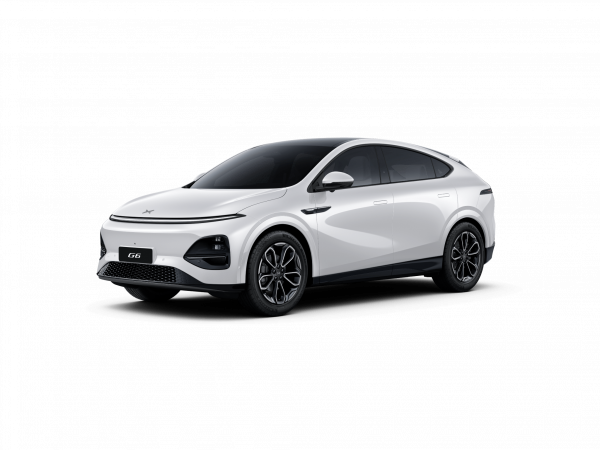
The XPENG G6 stands apart in Australia mainly through charging speed, equipment and pricing. The 2026 range starts at A$51,800 before on-road costs, while the RWD Long Range costs A$56,800 and provides up to 525 km WLTP range from an 80.8 kWh LFP battery. Its 800V electrical system supports up to 451 kW DC charging, with XPENG claiming 10–80% charging in 12 minutes under suitable conditions. The AWD Performance produces 358 kW and 660 Nm, reaches 100 km/h in 4.13 seconds, yet retains a 510 km WLTP rating. Private owners also receive a seven-year, unlimited-kilometre vehicle warranty.
Australia's mid-size EV market in 2026 gives buyers considerably more choice than it did only a few years ago. Tesla, BYD, Zeekr and several established European, Japanese and Korean brands now compete around the A$50,000–A$75,000 range, so battery size alone says little about how useful an electric SUV will be. Charging rate, efficiency, cabin space, warranty terms and software now deserve equal attention.
The G6 enters that market with three main specifications rather than one expensive high-end version. The RWD Standard Range starts at A$51,800 before on-road costs, the RWD Long Range at A$56,800, and the AWD Performance at A$63,800. The existing rear-wheel-drive versions became A$3,000 cheaper with the 2026 update, giving buyers room to choose battery range or extra power without moving far beyond mainstream SUV pricing.
| 2026 G6 version | Battery | WLTP range | Power | DC charging |
|---|---|---|---|---|
| RWD Standard Range | 68.5 kWh LFP | about 470 km | 185 kW | up to 382 kW |
| RWD Long Range | 80.8 kWh LFP | 525 km | 218 kW | up to 451 kW |
| AWD Performance | 80.8 kWh LFP | 510 km | 358 kW | up to 451 kW |
The table shows why the Long Range is likely to attract buyers covering both city and regional kilometres. It uses an 80.8 kWh battery yet reaches 525 km on the WLTP cycle, with official energy consumption listed at 17.9 kWh/100 km on 20-inch wheels. The AWD Performance rises to 18.4 kWh/100 km, a difference of about 2.8%, despite adding a second motor and substantially more output.
Battery capacity is only part of that calculation. XPENG changed the updated G6 to LFP battery chemistry, including the 80.8 kWh packs used by the Long Range and Performance. LFP cells avoid nickel and cobalt in the cathode and are commonly selected for thermal stability and long cycle life. XPENG combines them with a 5C charging system rather than treating LFP as an entry-level battery choice.
Charging is where the difference becomes easier to measure. The Long Range and AWD Performance can accept up to 451 kW DC under suitable conditions, while XPENG states that 10% to 80% takes about 12 minutes on sufficiently powerful equipment. For the Long Range, XPENG reports that up to 427 km of nominal range can be added during a fast-charging stop.
A 10–80% session covers 70% of the battery's usable charging window. At the claimed 12-minute time, the stop is closer to a normal highway rest break than the 30–40 minute charging sessions associated with many earlier EVs.
Actual Australian charging sessions will not always reach 451 kW. Public sites vary widely in output, and a 150 kW or 350 kW charger cannot supply more power simply because the car can accept it. Battery temperature, starting state of charge, charger sharing and ambient conditions also change the charging curve. The 451 kW number should therefore be treated as a peak capability rather than a guaranteed roadside rate.
That qualification matters less for home use. Most owners using an 11 kW AC wallbox will charge overnight rather than look for a 400 kW public charger. XPENG lists approximately 9.2 hours for a 5–100% AC charge on the 80.8 kWh versions, so the fast DC hardware is mainly relevant when a 2026 G6 leaves its normal commuting routine for longer interstate or regional trips.
Efficiency also helps reduce dependence on public infrastructure. At 17.9 kWh/100 km, 200 km of theoretical WLTP-pattern driving would consume about 35.8 kWh. A household covering 40 km on each weekday would travel roughly 200 km in a five-day working week, leaving a considerable share of an 80.8 kWh battery before normal charging losses and real-world variables are considered.
The G6 also offers 6 kW vehicle-to-load output on the Long Range and Performance specifications. That allows the traction battery to supply compatible external electrical equipment, which can be useful for camping, outdoor equipment or temporary power needs. Buyers comparing an elctric suv should therefore compare not only how the battery receives electricity, but also what the vehicle can supply from it.
Size explains another part of its Australian positioning. The G6 measures about 4,758 mm long, 1,920 mm wide and 1,650 mm high, with a 2,890 mm wheelbase. Cargo capacity is listed at 571 litres with the rear seats in place and 1,374 litres with them folded, while the Long Range has a kerb weight of 2,115 kg and a 475 kg payload rating.
Those figures put it close to the dimensions many Australian families already use every day, without requiring a seven-seat body. A 5.8 m turning radius also matters in shopping-centre car parks and residential garages. Its 0.248 drag coefficient helps the energy-use figures, while the long wheelbase gives the cabin more usable length than an equivalent petrol SUV needing space for a large engine and conventional transmission.
Inside, XPENG uses two screens rather than moving nearly every display function to one central panel. A 10.25-inch digital instrument cluster sits in front of the driver, while a 15.6-inch touchscreen handles infotainment and many vehicle settings. Wireless Apple CarPlay and Android Auto are included, together with an 18-speaker audio system on the updated 2026 specification.
The interface is paired with OTA software updates, navigation, a voice assistant, Bluetooth phone access, NFC key access and app-based vehicle functions. Owners should still test the interface before buying: climate settings and vehicle controls managed through touchscreens feel natural to some users and slower to others. A 30-minute test drive can reveal more about that preference than a specification sheet.
Driver-assistance hardware adds another layer. The Australian G6 specification lists adaptive cruise control, lane centring, lane-keeping functions, blind-spot monitoring, rear cross-traffic alert, automatic emergency braking, automated parking and a surround-view camera. Selected versions also use Nvidia Orin-X processing and automatic lane changing. Seven airbags are fitted across the range.
Those systems should still be treated as assistance rather than autonomous operation. Road markings, heavy rain, low sun, construction zones and unusual lane layouts can reduce system performance. Euro NCAP awarded the G6 a five-star rating, providing an independent reference point alongside the long electronic equipment list, although software features and regional specifications can change between model years.
Performance buyers receive a very different car without moving to a separate platform. The AWD model produces 358 kW and 660 Nm, compared with 218 kW and 440 Nm in the Long Range RWD. Its claimed 0–100 km/h time falls from 6.7 seconds to 4.13 seconds, while WLTP range decreases by only 15 km, from 525 km to 510 km.
That 15 km reduction is less than 3% of the Long Range rating, although actual high-speed use will consume substantially more energy than a WLTP cycle. The AWD version weighs 2,220 kg, 105 kg more than the Long Range, and lists a 470 kg payload. Buyers mainly interested in distance rather than acceleration can therefore save A$7,000 at 2026 list pricing by choosing the Long Range.
Competitor pricing puts that difference into context. CarExpert listed the 2026 Zeekr 7X from A$57,900 before on-road costs, with its Long Range at A$63,900 and Performance at A$72,900. The G6's A$56,800 Long Range sits A$7,100 below the comparable long-range Zeekr on list price, although the Zeekr carries a larger 100 kWh battery and offers a 22 kW AC charger.
The comparison is not one-sided. The Zeekr 7X Long Range targets 615 km WLTP and the base version supports up to 450 kW DC charging, so buyers prioritising maximum rated distance or 22 kW AC charging have reasons to examine it. The G6 answers with a lower entry cost, a smaller and lighter battery pack, and a seven-year private-use vehicle warranty rather than Zeekr's five-year unlimited-kilometre coverage.
Ownership support deserves the same attention as acceleration figures because XPENG is still expanding its Australian presence. For private use, XPENG Australia states a seven-year, unlimited-kilometre whole-vehicle warranty. Commercial vehicles receive seven years or 160,000 km, while the traction battery, battery-management system, motor and intelligent power unit receive eight years or 160,000 km of coverage.
Scheduled servicing is required every 12 months or 20,000 km, whichever comes first, and roadside assistance is provided for seven years from first registration. XPENG also said in July 2026 that it planned up to 50 Australian sales outlets and three flagship experience centres, alongside an operating genuine-parts warehouse in Melbourne. Network size and local service access should still be checked against the buyer's postcode before purchase.
For a household covering 15,000 km per year, the Long Range's official 17.9 kWh/100 km figure equates to about 2,685 kWh of traction energy before charging losses. At 20,000 km, the same calculation rises to roughly 3,580 kWh. Home electricity tariffs, solar production and public fast-charger pricing can therefore change annual running costs more than a small difference in advertised WLTP range.
A buyer regularly travelling long distances should look at charger locations as carefully as the 525 km rating. Someone mostly covering metropolitan kilometres can place more weight on home charging, the 571-litre boot, parking cameras and the seven-year warranty. The G6's specifications allow those two use patterns to share the same vehicle without requiring a battery larger than 80.8 kWh.